Copyright Infringement
Copyright infringement in the most general sense is the act of
substantially reproducing or copying a work, without permission of the copyright owner.
Even if the work is a totally new creation, it may be judged a "derivative work" which also falls under copyright infringement, e.g. a story about a young girl with a lightning scar on her forearm who attends a school for magic...
(Incidentally, the name of a character such as Harry Potter can be protected by a trademark.)

NOTE:
Please refer to our main Copyright page for more information on copyright protection
and various related free legal forms.
The owner of a work has the right to control the use of the work - translations, adaptations, broadcast, performance, reproduction - and to benefit financially from the work. A violation of any of these rights will be seen as infringement.
The law will deal even more harshly with offenders if it is done for commercial gain such as the piracy of music, films and computer games.
Copyrights can be transferred to another person and this should be done in writing. Take a look at our Assignment of Copyright agreement which makes provision for a description of the work and whether all or specific rights are transferred to the assignee.
The alternative to assignment of copyright would be for the copyright owner to retain his/her right, but grant a copyright license to another. This can be either an:
- Exclusive right - the named licensee has sole right to utilise or exploit the specified copyrights, even to the exclusion of the copyright holder (licensor); or
- Non-exclusive right - the copyrights holder may grant more than one license to others to use the copyright for commercial gain, and the holder may also continue to exploit the work.
Furthermore, there are a range of copyright licenses and there may be further restrictions e.g. geographical area, product, time limitation, whether attribution is required etc. This can be a minefield and consulting with an experienced copyright attorney is essential if you are unsure about copyright licenses!
What Are Examples of Public Domain?
A distinction must be made between what is publicly accessible (for example, content on the internet) and what is in the public domain (owned by the public). Copyright infringement is not applicable to work which is in the public domain. Examples of such material are:
- Government publications if it's administrative or legislative in nature;
- Political speeches;
- Open source computer programs (on-selling of such computer programs will be unlawful);
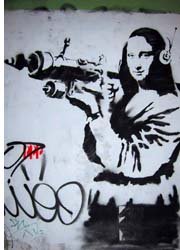
- Copyright whose lifespan has ended such as Shakespeare's plays, Michelangelo's "David" or Leonardo da Vinci's "Mona Lisa"; and
- Where copyrights are expressly waived as the case may be in creative commons works that are dedicated to the worldwide public domain.
What does Not constitute Copyright Infringement?
- Reproducing work for private, personal, academic or research purposes. This does not give anyone carte blanche to copy work and the "fair dealing" principle will apply.
- Using small portions of a work with acknowledgement to the author - if the portion used does not represent the core of the original work. It is the importance or quality of the work copied rather than the quantity, which will be a deciding factor. Determining how much or how little constitutes infringement or fair use is a gray area and care must be taken before using anyone's work.
- Creating an identical work without copying the original such as where two identical photographs of the same scene are produced by separate people.
- Where a similar building is built without working from the original architectural drawings.

Should you wish to use portions of someone else's work for anything but limited personal use, you should get permission. If in doubt, consult with your copyright attorney for advice.
Penalties for Copyright Infringement
The simplest case scenario for infringement may just be a letter from the author requesting the removal of the infringing material from your work.
If infringement is proven in court, the following penalties may be imposed - depending on the scope and purpose of infringement and to what extent the rights of the owner have been affected.
- An injunction (court order) to stop or prevent infringement.
- Impounding of material - and if infringement is proven - the destruction of such material.
- Actual damages suffered by the copyright owner or a reasonable royalty. Additional profits made by the infringer may be subject to penalties.
- Statutory damages (amount determined by law) instead of actual damages and profits. The amount awarded is at the discretion of the court and the maximum amount may be imposed if infringement was committed willfully.
- Court costs and attorney's fees.
- Imprisonment (Generally not the case).
- Fines for fraudulent copyright acts.
Claiming fair use as defense against copyright infringement is open to interpretation by the courts and unfortunately there are no hard and fast rules.
You are here:
Does this site deserve your thumbs up?
Free Legal Documents
- Write Your Will
- Power of Attorney
- Parental Consent
- Promissory Notes
- Release of Liability
- Affidavits
- Bill of Sale
- Photography
- Employment
- Real Estate
- Room Renting
- Landlords
- Renter's Rights
- General Contractors
- Independent Contractors
- Franchises
Intellectual Property
Featured Legal Forms:
Free-Legal-Document.com does not sell any personal information. This site uses cookies for its operation and to enhance your experience. Privacy Policy
Copyright © 2004- Free-Legal-Document.com All rights reserved
Follow @FreeLegalDocs